Bible Games: Trivia & Verse
Floral GameWord
4.8131.00 Reviews
- Version
- 1.0.27
- Installs
- 10.00K
- Age Rating
- Everyone
Screenshots
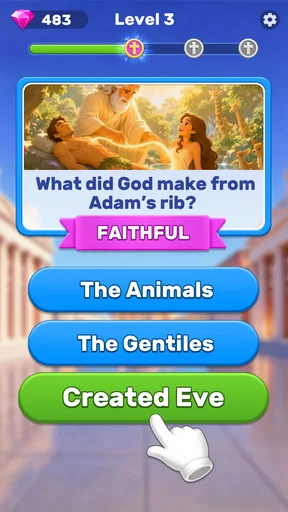
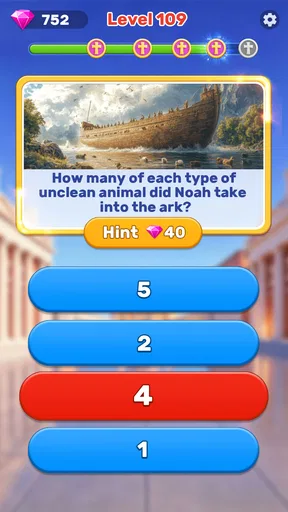
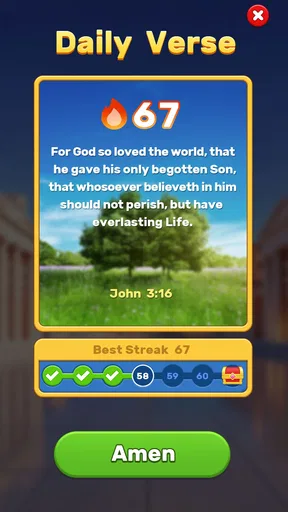
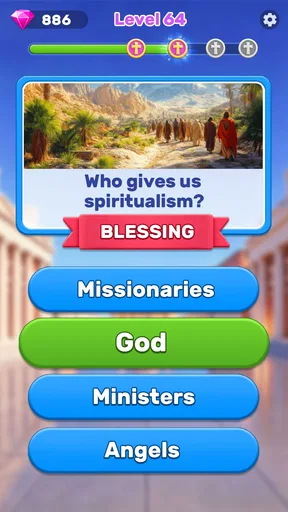
Our Review of Bible Games: Trivia & Verse
 Analysis by Appyee
I approached Bible Games: Trivia & Verse expecting a straightforward word game with a religious theme, but its appeal is a little more specific than that. It is designed for short quiz sessions built around Bible-related knowledge and daily verse content, making it feel closer to a pocket devotional activity than to a conventional competitive trivia app. After spending time with it, I found the main attraction is its calm, purposeful mood rather than a complicated game system.
That distinction matters. If you want a fast, noisy quiz with broad general-knowledge categories, this probably will not replace your usual trivia favorite. If you enjoy testing your memory of biblical names, stories, teachings, and vocabulary while keeping a verse-based routine, it has a much clearer reason to exist. I would recommend it most to people who want a small daily habit they can open during a quiet moment, not to players looking for a large adventure or a deep word-puzzle campaign.
How the first impression shapes the experience
The game’s presentation immediately points toward reflection rather than urgency. The combination of Bible trivia and a daily verse gives each session a recognizable purpose: answer a few questions, think about the subject, and return later for something new. That structure is easy to understand, which is useful when I am opening an app for a brief break instead of preparing for a long play session.
Floral Game keeps the concept focused. Rather than trying to turn religious material into an elaborate role-playing system, the developer presents it as a word-focused game with a devotional layer. That restraint is one of its strengths. I do not have to learn a complicated interface before reaching the actual questions, and the theme is not buried beneath unrelated rewards or distractions.
The free entry point also makes it easy to try without much commitment. The game is listed for Everyone, so it is suitable for a broad audience, including families who want a simple shared activity. Still, “Everyone” does not mean every question will be equally accessible. Younger players may need help with unfamiliar names or historical context, while regular Bible readers may find the early material more comfortable than someone encountering these subjects for the first time.
The public response is encouraging: the game holds a 4.8 average from around 2.5 thousand ratings, with more than a hundred written reviews and over 10 thousand installs. I would treat those figures as a sign that the central idea is connecting with users, not as proof that it will suit every player. A quiz based on one subject area naturally depends on your interests and prior knowledge.
A useful routine for short breaks
My favorite way to approach this kind of game is to give it a fixed place in the day. A few questions with breakfast, a verse during a commute, or a short evening session feels more natural than trying to play continuously. The daily element works best when it becomes a gentle prompt rather than another task competing for attention.
There is also a practical benefit to keeping sessions small. Because the focus is narrow, I can remember which topics challenged me and revisit them mentally later. With a general trivia app, I might jump from geography to sports to entertainment without retaining much. Here, the subject matter has enough continuity that wrong answers can encourage further reading or conversation.
One tip I found helpful is to avoid treating every question as a speed test. Read the wording carefully before answering, especially when several names or events sound familiar. The value of this game is not only getting a perfect streak; it is noticing what I know, what I have forgotten, and which parts of the text deserve a second look.
How the world is communicated through language
The setting is carried mainly by language and subject matter rather than by a large fictional world. That can sound modest compared with a story-driven game, but it suits the purpose. Biblical references create the sense of place, time, and tradition. A question about a person, event, or teaching can suggest a much wider world without requiring maps, characters, or lengthy cutscenes.
This approach also keeps the experience readable. The game does not need to invent a fantasy setting around its material, and that helps the quiz remain the center of attention. I appreciate when a themed app understands that atmosphere can come from the choice of words and topics, not only from visual spectacle.
At the same time, this kind of design places a lot of pressure on clarity. A question can be difficult because the subject is genuinely challenging, or because the wording assumes background knowledge that a new player does not have. Those are very different experiences. Players who already spend time reading the Bible will probably recognize the vocabulary more quickly, while newcomers may need to use the game as a starting point rather than expect it to teach every answer in depth.
That is where the app works best alongside another habit. I would keep a note of questions I missed, then look up the relevant passage or discuss it with someone familiar with the material. The quiz can point toward a topic, but a short question and answer should not be mistaken for a complete explanation of a complex passage.
Who will feel at home here
This is a strong match for players who enjoy faith-based learning, Bible study groups seeking a light warm-up, parents looking for an age-appropriate conversation starter, and anyone who likes daily prompts with a clear theme. It can also work for someone returning to Bible reading after a long break because the quiz format feels less demanding than opening a lengthy study resource immediately.
I would be more cautious recommending it to players who want broad educational coverage. A traditional word game may offer anagrams, spelling challenges, or vocabulary puzzles across many subjects. A general trivia title will usually provide more variety. Those alternatives are better if your main goal is to exercise language skills without a religious focus.
It is also not the right choice if you need a detailed study tool with extensive commentary, cross-references, or a structured reading plan. The game’s value is its accessibility and repeatable quiz format. Anyone looking for scholarly depth should use a dedicated Bible reference or study app alongside it rather than expecting this game to fill that role.
Sound, rhythm, and the feeling of a session
The rhythm of a daily quiz changes how I judge the experience. This is not built around long action sequences or escalating tension. Its natural pace is pause, read, consider, answer, and continue. That slower loop supports the devotional side of the concept and makes the app comfortable for a quiet room or a short break when I do not want something demanding.
Because the game is centered on questions and verses, the most important “sound” is really the mental space around the words. A noisy, frantic presentation would work against the subject. The appeal comes from giving the content room to register. I found that the game is easier to enjoy when I resist the urge to rush through it as if every round were a contest.
This pacing can also expose the main limitation of the format: repetition may become noticeable for players who use it heavily. A daily quiz is naturally more sustainable when approached in small portions. If I tried to turn it into a long evening session, the narrow theme would likely feel less varied than a larger word-game collection. The app is better at creating a regular pause than at delivering hours of uninterrupted entertainment.
For families, that rhythm can be useful. One person can read a question aloud, everyone can make a guess, and the answer can lead to a short conversation. I would not frame it as a formal lesson, but it can create an easy opening for discussion. The daily verse gives that interaction a natural endpoint instead of encouraging endless screen time.
There is a trade-off between calmness and excitement here. Players who enjoy streaks, timers, leaderboards, or highly animated feedback may find the experience too restrained. Players who are tired of apps that constantly demand attention may see that restraint as the reason to keep it installed. In my view, the slower rhythm is intentional and appropriate, but it will not satisfy every idea of what a game should feel like.
Where the mechanics fit the theme
The core design works because the quiz format is immediately compatible with the subject. Bible knowledge can be tested in small pieces, and the daily verse gives the experience a recurring anchor. The result is simple enough for casual use while still leaving room for personal improvement. I can return after a gap and understand what I am supposed to do without relearning a system.
One of the more useful ways to play is to separate memory from recognition. On the first pass, I try to answer without guessing from familiar-looking words. If I miss something, I treat that result as a prompt to investigate rather than as a failure. Later, I can tell whether I actually learned the material or merely recognized the answer from a previous session. That makes the app more valuable as a learning companion than as a disposable guessing game.
Another practical workflow is to use it before a group discussion. A few questions can reveal which topics people remember and which ones need context. The game is not a replacement for a lesson, but it can make a gathering more interactive. For an individual, the same method works before reading: use the quiz to activate memory, then read the related material with a clearer idea of what to notice.
The free price lowers the barrier to testing that routine, although optional purchases range from about two dollars to nearly one hundred dollars per item. That is a wide span, so I would advise deciding in advance whether the free experience already meets your needs. A game with a focused daily purpose does not automatically become more useful just because a larger purchase is available. I would only consider spending if the additional content clearly supports how I plan to use it.
It is also worth keeping expectations realistic about progression. This is not the sort of word game I would choose for collecting elaborate equipment, building a character, or unlocking a large map. Its progression is primarily personal: improving recall, recognizing patterns in the questions, and maintaining a daily habit. That can feel rewarding, but it is quieter than the progression systems found in mainstream mobile games.
Device fit and practical expectations
The current version is 1.0.27, and the game runs on devices using Android 8.0 or later. For someone deciding whether to install it on an older phone, that minimum requirement is the first practical check. The app is lightweight in concept, but compatibility still matters more than the simple store summary might suggest.
Since it is free to start and marked for Everyone, I see it as easy to recommend for a trial session, especially when a family wants to decide together. The more important question is not whether it can replace every other word game, but whether its specific subject and daily rhythm fit the household. A player who wants general vocabulary practice should look elsewhere; a player who wants Bible-centered quizzes has a much clearer reason to try it.
I would also avoid judging it solely by the number of questions answered in one sitting. The best use case is repeated, modest engagement. Open it when you have a few minutes, answer thoughtfully, and let the verse or missed question carry into the rest of the day. That approach respects the game’s pacing and reduces the chance that its focused content will feel repetitive.
Why the atmosphere works, and where it falls short
What holds the experience together is the agreement between theme, language, and rhythm. The Bible-centered material gives the app its identity, the quiz structure makes that material approachable, and the daily verse gives the routine a reflective finish. Nothing about the concept needs to be louder than it is. Its strongest quality is that it knows the mood it wants to create.
That mood is also the boundary of the experience. I would not install it expecting a full study library, a broad word-game anthology, or a high-energy competition. Someone who prefers fast rounds and constant novelty may lose interest, while someone who wants a small faith-based ritual may appreciate the lack of clutter. The same simplicity that makes it welcoming can make it feel limited under heavy use.
My advice is to try it with a specific purpose: a morning quiz, a family conversation, a group warm-up, or a gentle way to reconnect with Bible material. If you approach it as an all-purpose game, the narrow subject may disappoint. If you approach it as a compact blend of trivia and daily reflection, its design makes much more sense.
Overall, Floral Game has created a focused word game with a coherent atmosphere rather than a feature-heavy entertainment package. The 4.8 average and growing audience suggest that the idea resonates, but the real test is personal fit. I would keep it on my phone for short, thoughtful sessions and recommend it to friends who want Bible-related quizzes without the pressure of a formal study app. Its best feature is the way it turns a simple question-and-verse routine into a calm daily pause.
For me, that is enough to make it worthwhile, provided I remember what it is and what it is not. It is a free game for Everyone, released on May 15, 2026, from Floral Game, with a clear devotional angle and a modest scope. Choose it for the subject, the steady rhythm, and the chance to turn forgotten details into conversation. Choose another app if you need broad trivia, deep commentary, or hours of varied gameplay.
Verdict
Strengths of Bible Games: Trivia & Verse
- Quick Bible quizzes are convenient for short daily study sessions.
- Questions cover both Old and New Testament topics.
- Verse-based challenges can help reinforce Scripture recall.
- Simple gameplay makes it accessible for most age groups.
- Useful for personal practice, family play, or church activities.
Limitations of Bible Games: Trivia & Verse
- Some questions may depend on a specific Bible translation.
- Repeated quizzes can make the experience feel less fresh over time.
- Players seeking deeper study may find explanations too limited.
- Ads or in-app purchases may interrupt the quiz experience.
- Trivia difficulty may vary noticeably between different categories.
Other Releases by Floral Game
View All
Bible Trivia Quiz Game
Trivia4.8
Similar Picks in This Category
View All
Word Search - Word Puzzle Game
Bluetile4.8

Word Search Quest - Puzzles
Blackout Lab4.8

CodyCross: Crossword Puzzles
Fanatee, Inc.4.7

Words of Wonders: Crossword
Fugo Games4.9

Wordscapes: Word puzzle game
PeopleFun4.7

Word Search Explorer
PlaySimple Games4.9
Frequently Asked Questions
What is Bible Games: Trivia & Verse?
Bible Games: Trivia & Verse is a faith-based mobile app that combines Bible trivia with Scripture-focused activities. It is designed to help users test their knowledge of biblical stories, people, books, and teachings while also spending time with selected Bible verses. The format is generally casual and accessible, making it suitable for personal study, family use, or light religious entertainment.
How does the Bible trivia gameplay work?
The trivia portion presents questions related to the Bible, usually with several answer choices and immediate feedback after each response. Depending on the available mode, users may progress through quizzes, earn points, or replay questions to improve their results. The difficulty can vary, so beginners may find some rounds approachable while more experienced Bible readers may enjoy the challenge of less familiar details.
Does the app include Bible verses for daily reading or memorization?
Yes, Bible Games: Trivia & Verse places emphasis on Scripture as well as quiz content. Users can encounter verses alongside the game experience, which may be useful for reflection, memorization, or learning biblical passages in context. The exact translation, verse selection, and reading features can depend on the app version, so users who require a specific Bible translation should check the in-app information before downloading.
Is Bible Games: Trivia & Verse suitable for children and families?
The app can be a useful choice for families, church groups, and younger users who enjoy learning through questions and short activities. However, suitability depends on a child’s reading level, biblical background, and the difficulty of the questions. Parents should review the app’s content, advertising, privacy settings, and any available purchase options before allowing children to use it independently.
Does Bible Games: Trivia & Verse require an internet connection or include in-app purchases?
Some features may work without a constant connection, but online access can be required for downloading content, displaying advertisements, synchronizing progress, or receiving updates. Availability of offline play may vary by device and app version. Users should also check the store listing for advertising and in-app purchase details, since optional purchases, premium features, or ad removal may be offered.
Play our best games!


